
Tomb of Bahu Begum Ayodhya Entry Fee
- No Entry Fee
Tomb of Bahu Begum Ayodhya Phone
N/A
Rating:  | 4/5 stars
Based on total 31 reviews
Tomb of Bahu Begum Ayodhya Address: Maqbara Fatehganj Rd, Murawantola, Ram Nagar, Maqbara Fatehganj Rd, Murawantola, Ram Nagar, Faizabad, Uttar Pradesh, 224001, India
Ayodhya Tour Packages
Ayodhya Tour PackagesTomb of Bahu Begum Ayodhya Timings
| Day | Timing |
|---|---|
| Monday | 7:00 am – 4:00 pm |
| Tuesday | 7:00 am – 4:00 pm |
| Wednesday | 7:00 am – 4:00 pm |
| Thursday | 7:00 am – 4:00 pm |
| Friday | 7:00 am – 4:00 pm |
| Saturday | 7:00 am – 4:00 pm |
| Sunday | 7:00 am – 4:00 pm |
Ayodhya, the revered city where myth and history merge, beckons you with its sacred aura and age-old charm. Known for its profound significance in Hinduism, Ayodhya stands as a testament to India's spiritual heritage.
Amidst the ethereal charm and deeply entrenched religious aura of Ayodhya lies an architectural treasure—the Tomb of Bahu Begum. This splendid mausoleum, hidden amidst the city lanes, offers a glimpse into a fascinating historical narrative, weaving together the legacy of Ayodhya with the compelling story of Bahu Begum, an iconic Mughal figure.
Here, we embark on a journey through Ayodhya's sacred streets, where the city's beauty sets the stage for the awe-inspiring tale that unfolds within the walls of the Tomb of Bahu Begum. This structure mirrors the luxury and grace of a bygone era.
History of the Tomb of Bahu Begum
Faizabad, also known as Saket Faizabad, is famous for its rich cultural heritage. Throughout the centuries, the rulers of this city, known as Nawabs, made significant efforts to develop and improve it.
One of the most prosperous periods in Faizabad's history was during the reign of Nawab Shuja-ud-Daula. He played a vital role in enhancing Faizabad's beauty and grandeur by building stunning gardens, palaces, and other remarkable structures.
Nawab Shuja-ud-Daula was married to Bahu Begum, also known as Begum Unmatuzzohra Bano. Bahu Begum ka Maqbara, also recognized as the Tomb of Queen Begum Unmatuzzohra, was constructed in 1858 to commemorate her memory.
Bahu Begum was the widow of the third Nawab of Awadh, Shauja-ud-Daula. She married him in 1743 and resided in Faizabad, where she lived in a palace known as Moti Mahal.
Among the prominent ladies of Faizabad, Bahu Begum held a distinguished status and was highly regarded. Many of the notable monuments in Faizabad are attributed to her influence. She demonstrated a deep concern for the well-being of the people in the region. Unfortunately, she passed away in 1816, and her death marked a turning point in the development of Faizabad.
The construction of her Tomb resulted from a treaty involving Bahu Begum, the British government, and the Nawab of Awadh. According to the terms of this treaty, it was agreed that three lakhs of rupees would be set aside from Bahu Begum's substantial wealth to construct this monument following her demise. The responsibility for this task was entrusted to Bahu Begum's chief advisor, Darab Ali Khan.
After Bahu Begum's demise on January 27, 1816, Darab Ali Khan began constructing this impressive structure. However, work came to a halt in 1818 following the death of Darab Ali Khan.
The project was then carried forward by Panah Ali, Vakil, and Mirza Haider, the three sons of Bahu Begum's adopted daughter, eventually culminating in completing the Maqbara in 1858. It is also believed that Umrao Jan's father worked on the site as a 'Jamadar.'
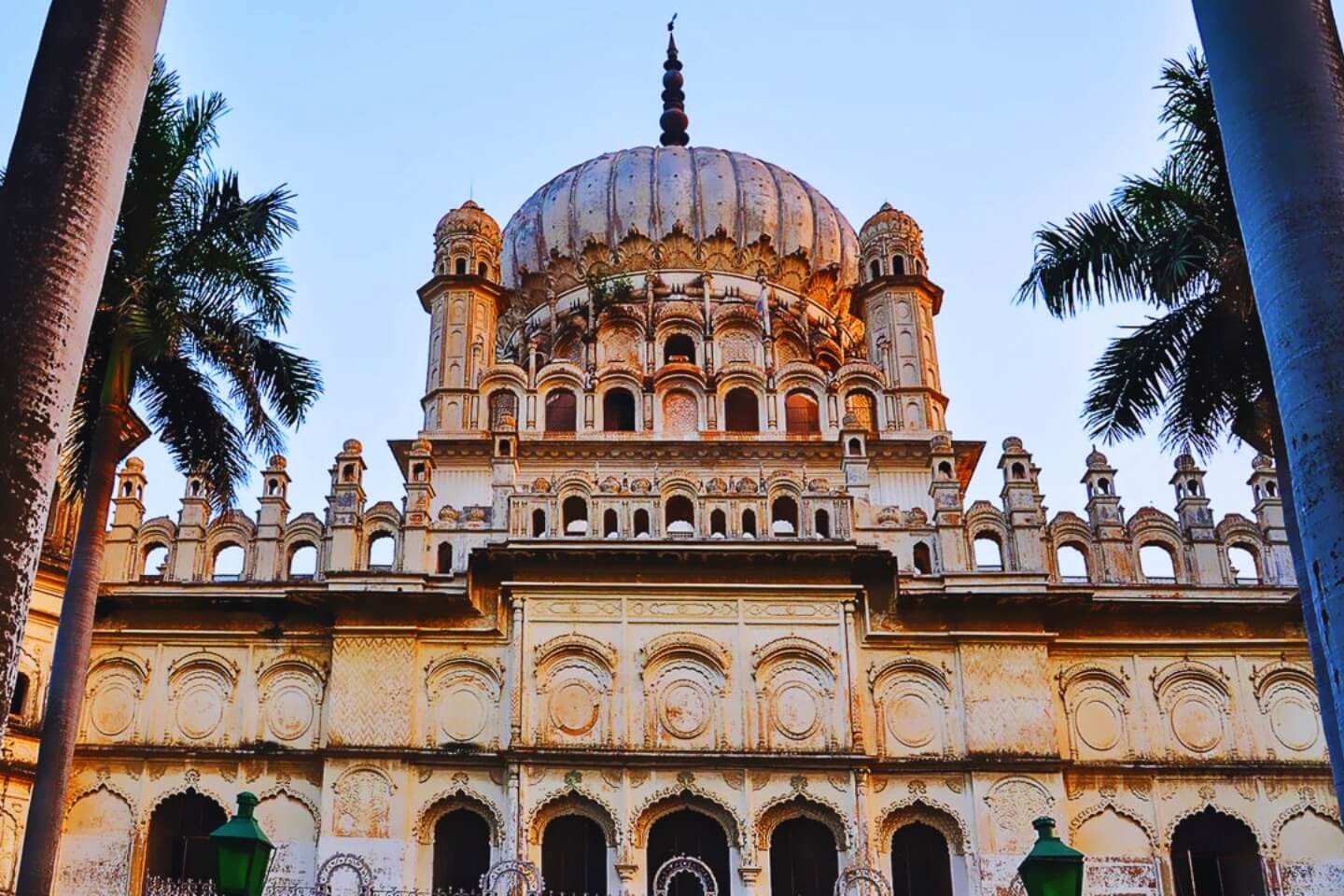
The entire construction of the Maqbara was executed with meticulous attention to detail. The marble used in its construction, which is nearly two centuries old, continues to gleam. Rising 42 metres in height, the Tomb offers a breathtaking panoramic view of the entire city and is a moment worth capturing.
Architecture of the Tomb of Bahu Begum
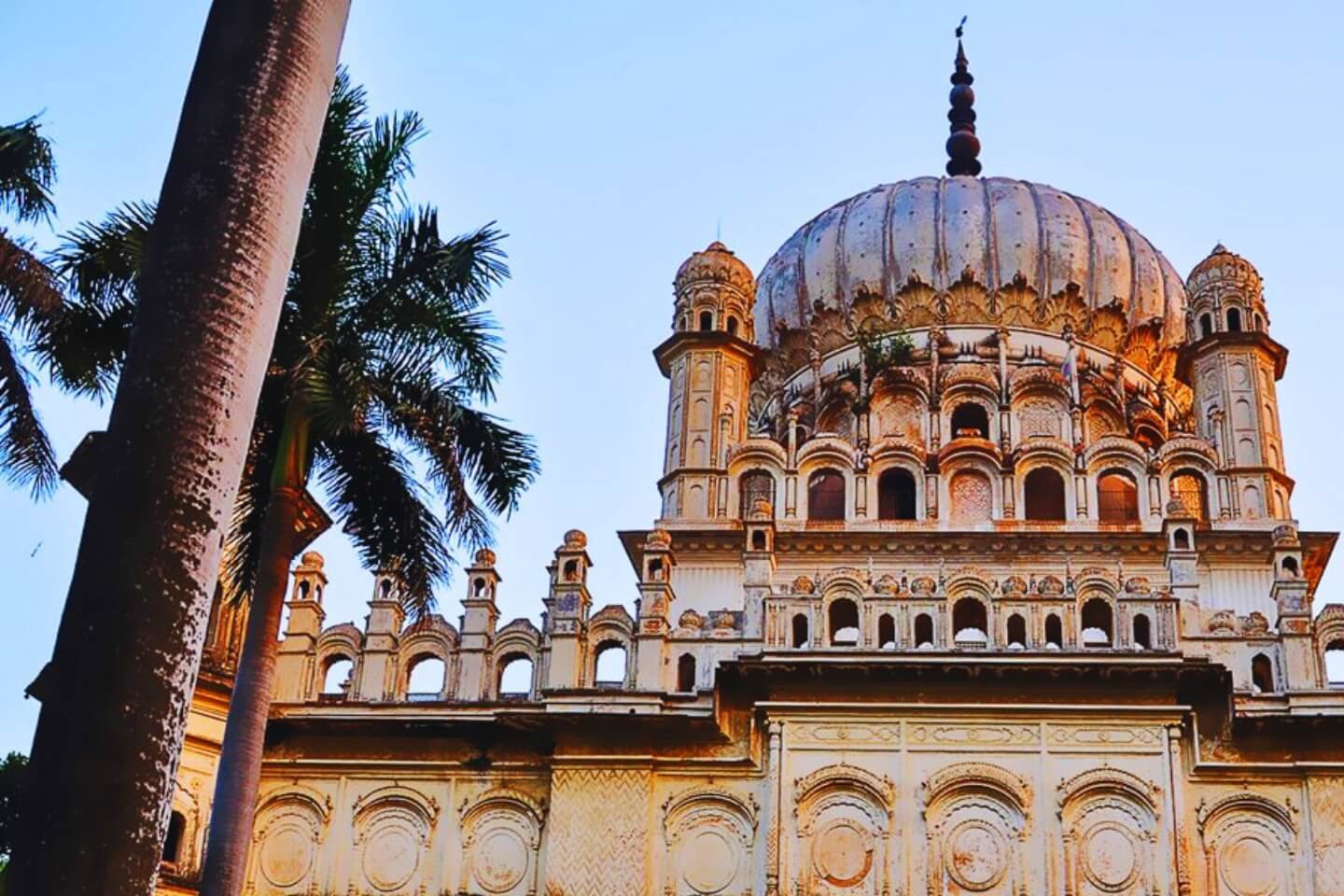
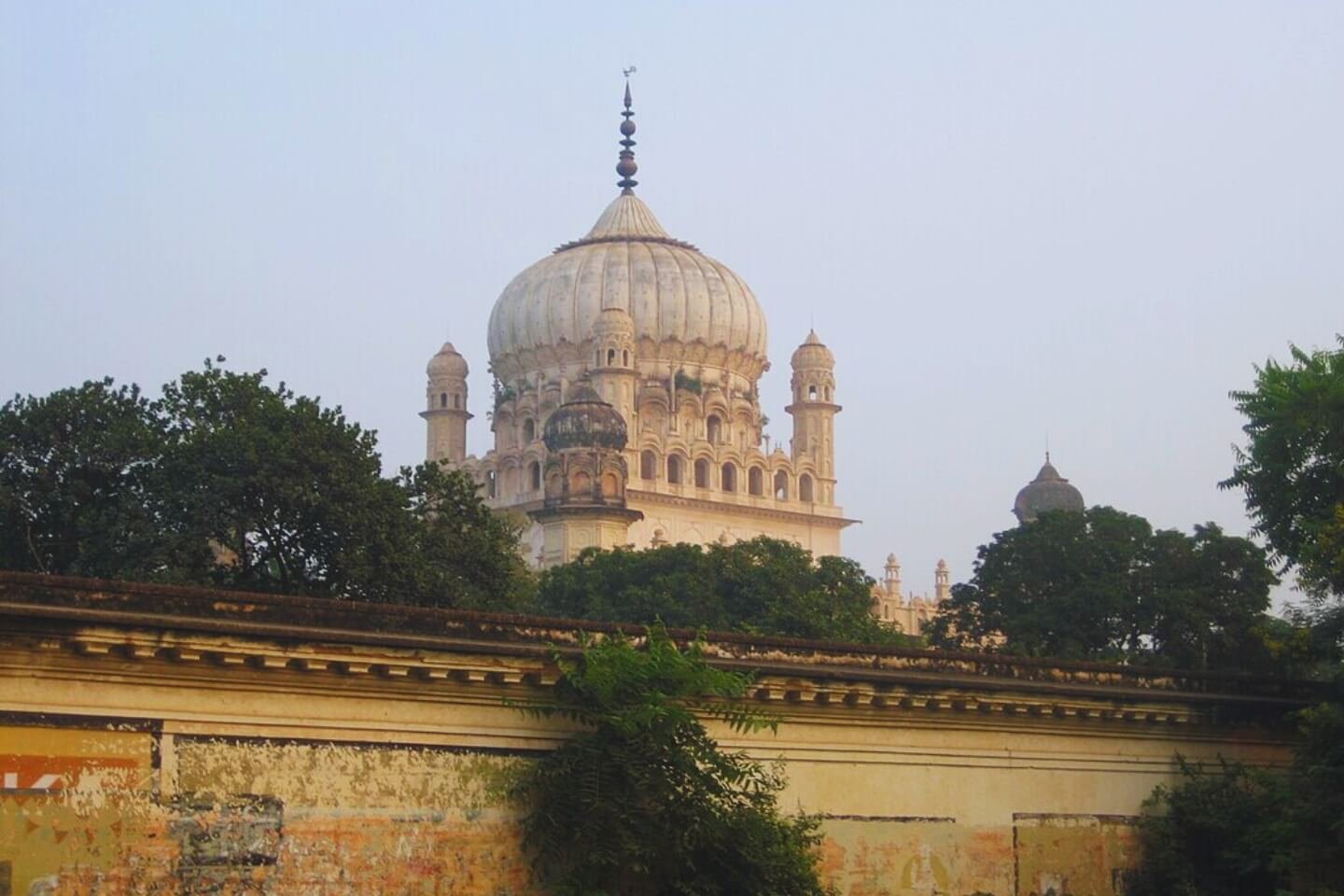
The Mausoleum of Bahu Begum is an impressive structure that stands at a height of 42 metres, and it has multiple levels within it.
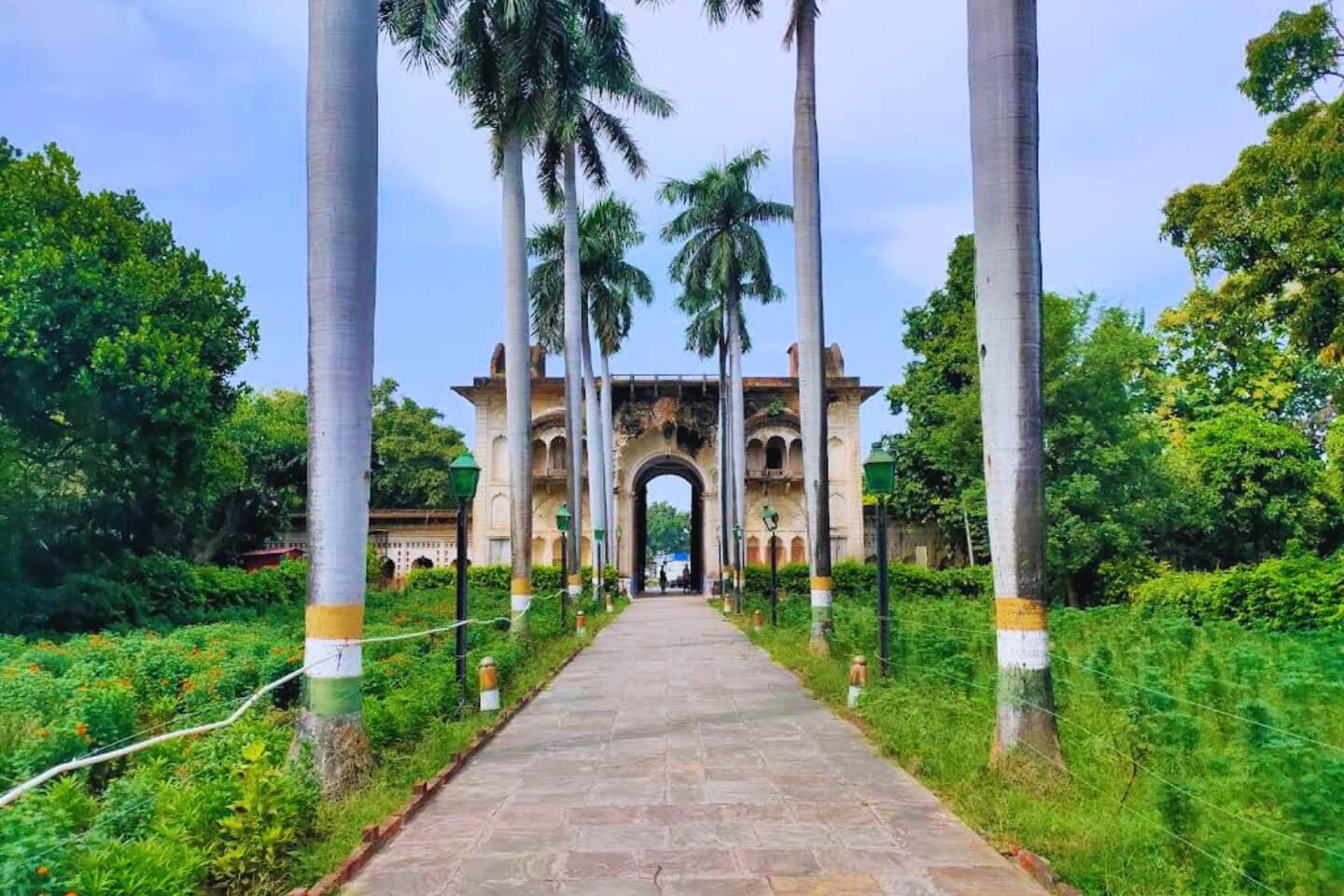
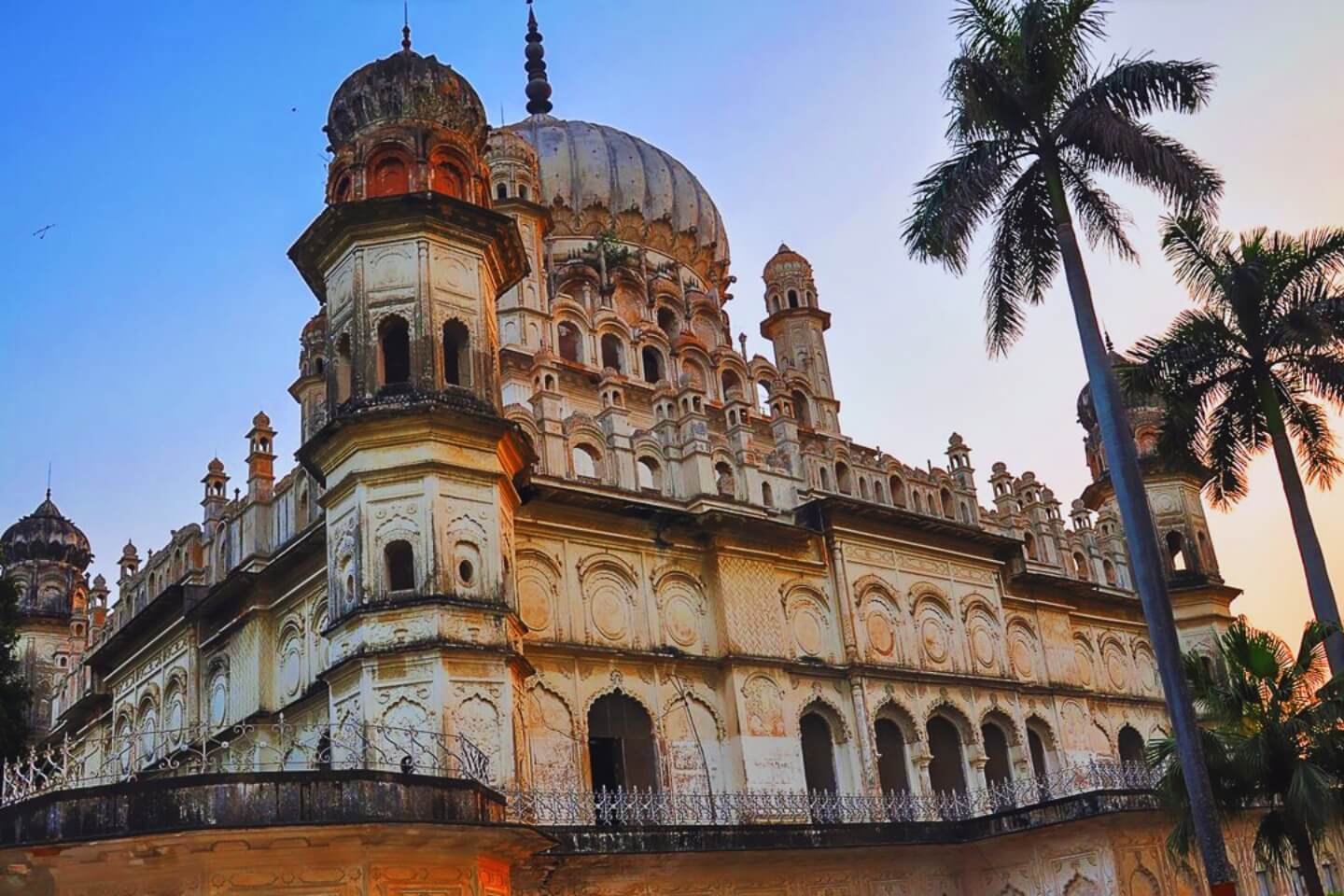
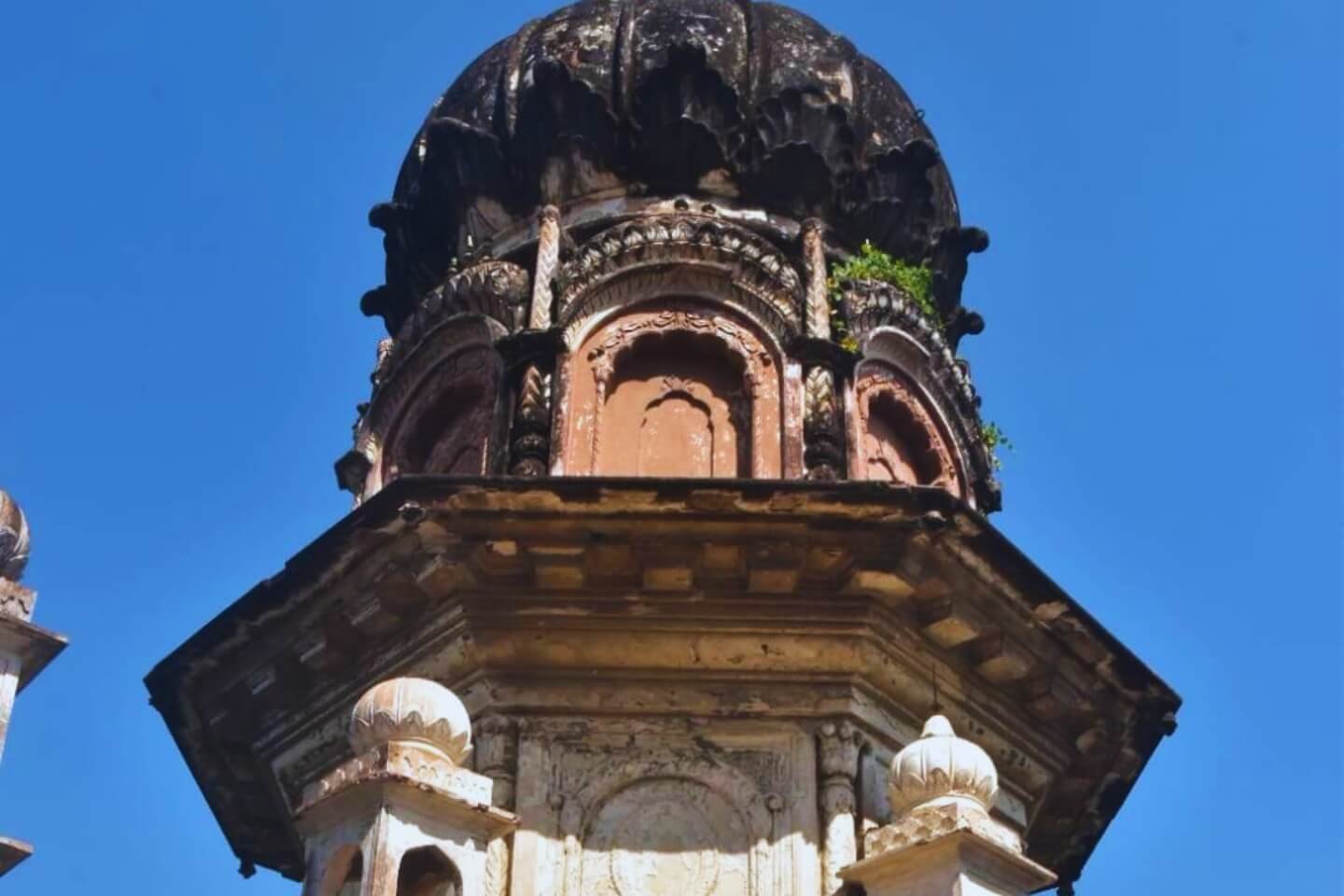
On the outside of the building, there is a significant central dome, along with many smaller domes all around. The entrance to the Tomb of Bahu Begum is through a grand and tall gate.
Bahu Begum's burial place is on the ground floor, but it is not open to the public. You can reach the upper levels with halls and corridors by climbing a staircase, and from there, you can enjoy a beautiful view of the surroundings and the city of Ayodhya.
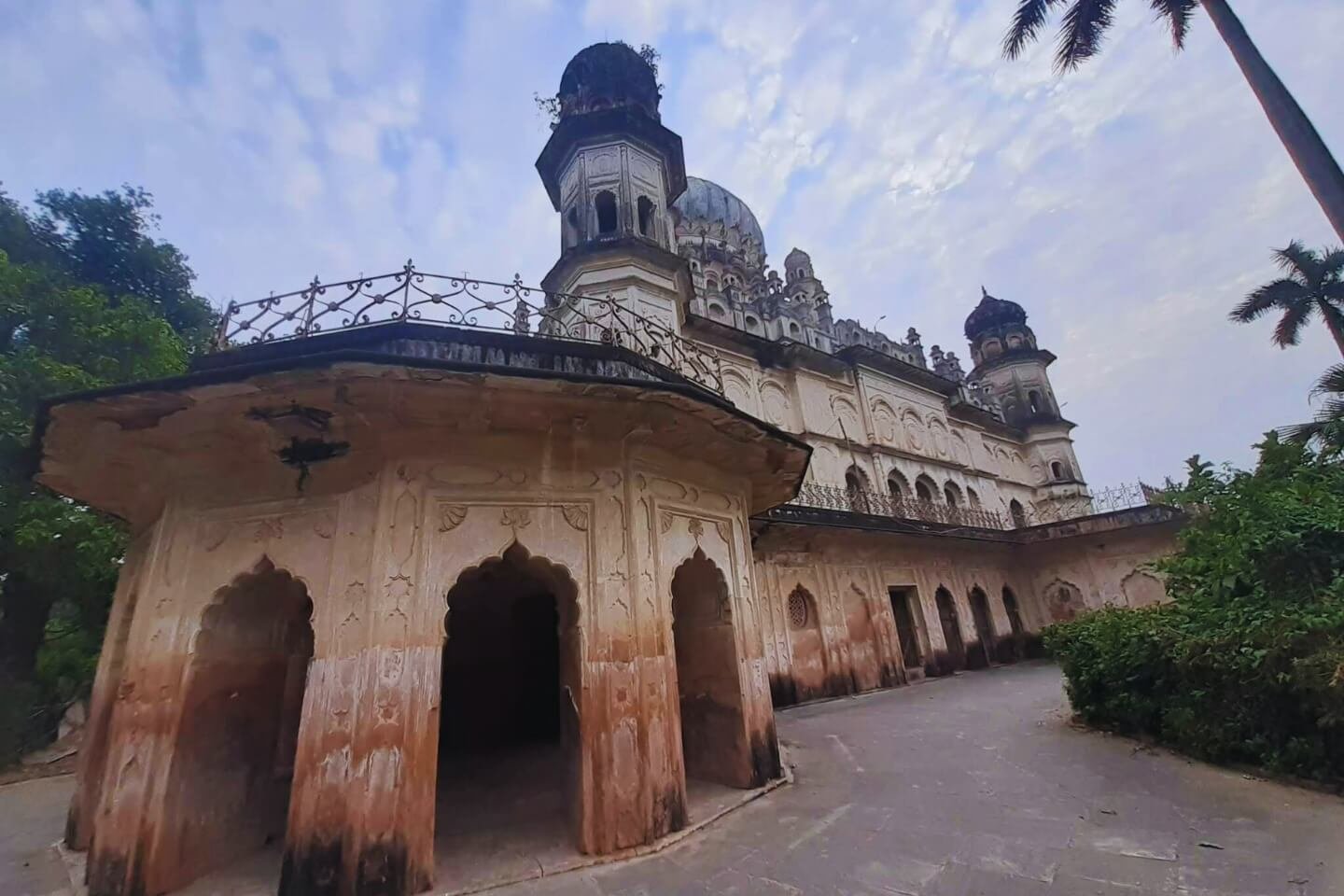
This mausoleum is an excellent example of Awadhi architecture, known for its intricate designs on the domes and walls.
You can see twin fish motifs on the walls and lovely blue and white patterns on the ceiling, which have a pale yellow colour. There is also stucco work on the ceiling. To enter the halls inside the Tomb, you go through an arched entrance.
At the corners of the outer walls, some structures resemble minarets, giving the monument an imposing look that speaks to the grandeur of the Nawabs.
The Tomb is surrounded by lush greenery, creating a serene atmosphere. The marble used in its construction has stood the test of time and still looks radiant, even though the Tomb is over 200 years old.
Entry fees and timings of the Tomb of Bahu Begum
Entry to this beautiful Tomb is free for all its visitors. You can visit the place on any day of the week from 7:00 AM to 4:00 PM.
Best time to visit the Tomb of Bahu Begum
The best time to visit the Tomb is from October to March. Cold weather is the best to visit Ayodhya. The cool, breezy weather will make you explore the city at its best.
Image Gallery of Tomb of Bahu Begum Ayodhya
How to reach the Tomb of Bahu Begum
The Tomb of Bahu Begum is at 767 Maqbara Fatehganj Rd, Murawantola, Ram Nagar, Faizabad, Uttar Pradesh 224001. Reaching the Tomb of Bahu Begum in Ayodhya is a journey through history and spirituality. To get there, first, you'll need to make your way to Ayodhya.
By Road: Ayodhya has good road connectivity. You can take buses or hire taxis from nearby cities like Lucknow, Faizabad, or other major towns in Uttar Pradesh. National Highways and well-maintained roads lead to Ayodhya, making it accessible by private or public transportation.
By Rail: Ayodhya has its railway station, facilitating train travel from major cities across India. Trains from cities like Lucknow, Varanasi, Delhi, and Kolkata operate frequently, providing easy access to the city.
By Air: The nearest airport to Ayodhya is the Lal Bahadur Shastri Airport in Varanasi, approximately 200 km away. From the airport, you can hire taxis or use bus services to reach Ayodhya.
Once in Ayodhya, reaching the Tomb of Bahu Begum is relatively straightforward. Located near the city centre, the Tomb is accessible via local transport or on foot from various points in Ayodhya.
Auto-rickshaws or taxis from the list of top car rental companies in Ayodhya can take you directly to the Tomb, which is close to the historic sites and central areas of the city, ensuring convenient access for you seeking to explore this remarkable architectural gem.
The Tomb of Bahu Begum is one of the most fascinating places you might have heard of. The place’s history itself talks about the pride and bravery of the Begum, which stands as a testament to today’s generation as well. Also, besides the history, the work and architecture, the minute carvings are praiseworthy.
Book an Ayodhya tour package from Ayodhya Tourism and visit this beautiful historical place to explore the other side of Ayodhya. Please fill out the Contact Us form to talk to one of our travel experts.